Consistent, scalable UI system
Built with Tailwind CSS and a component kit approach (shadcn/ui-style primitives) to keep spacing/typography/interaction patterns consistent across the product.
Portfolio case study
Developed with zero AI assistance
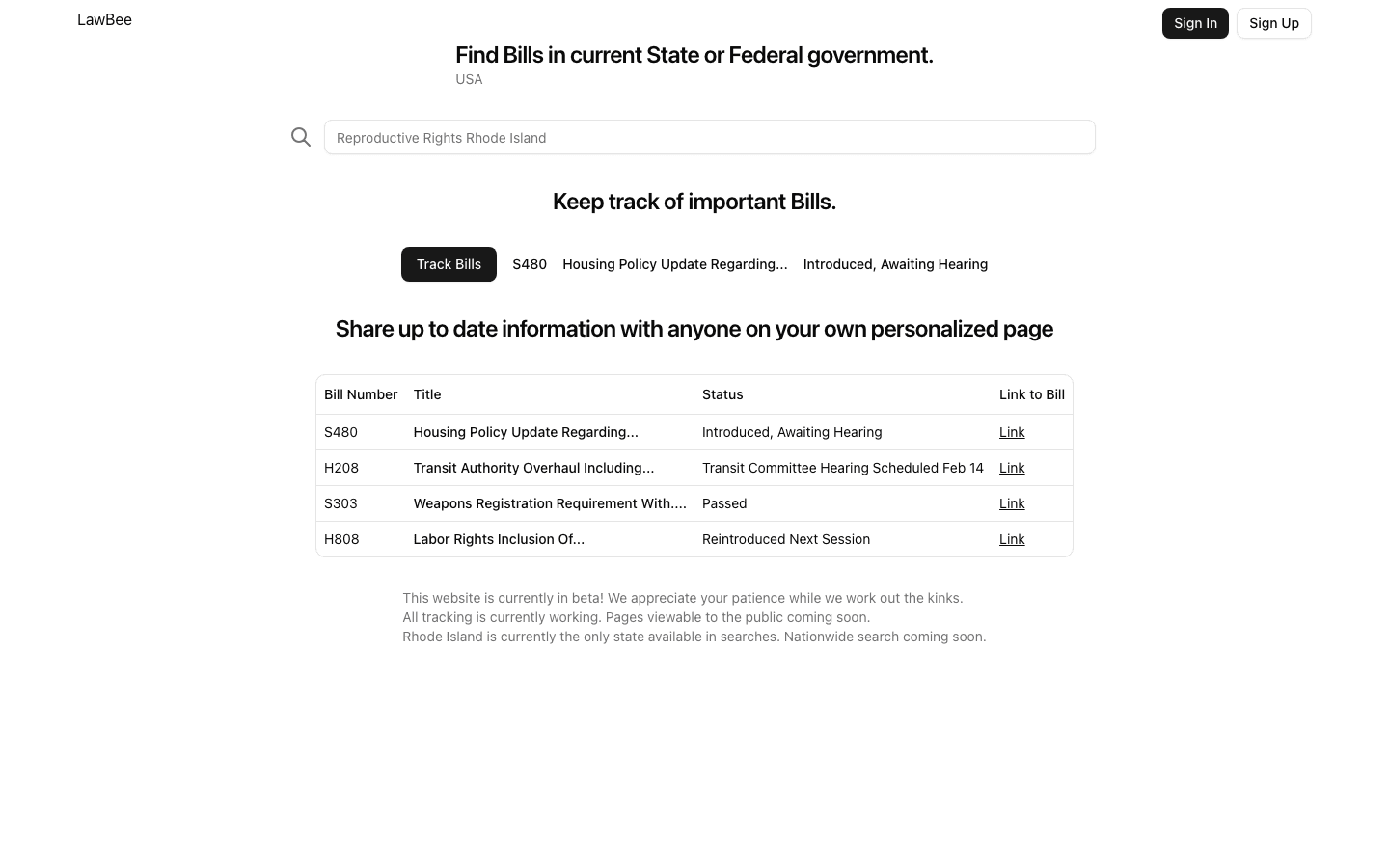
Built Lawbee to allow issues focused NGOs regularly track legislation around core fundraising issues in minutes.
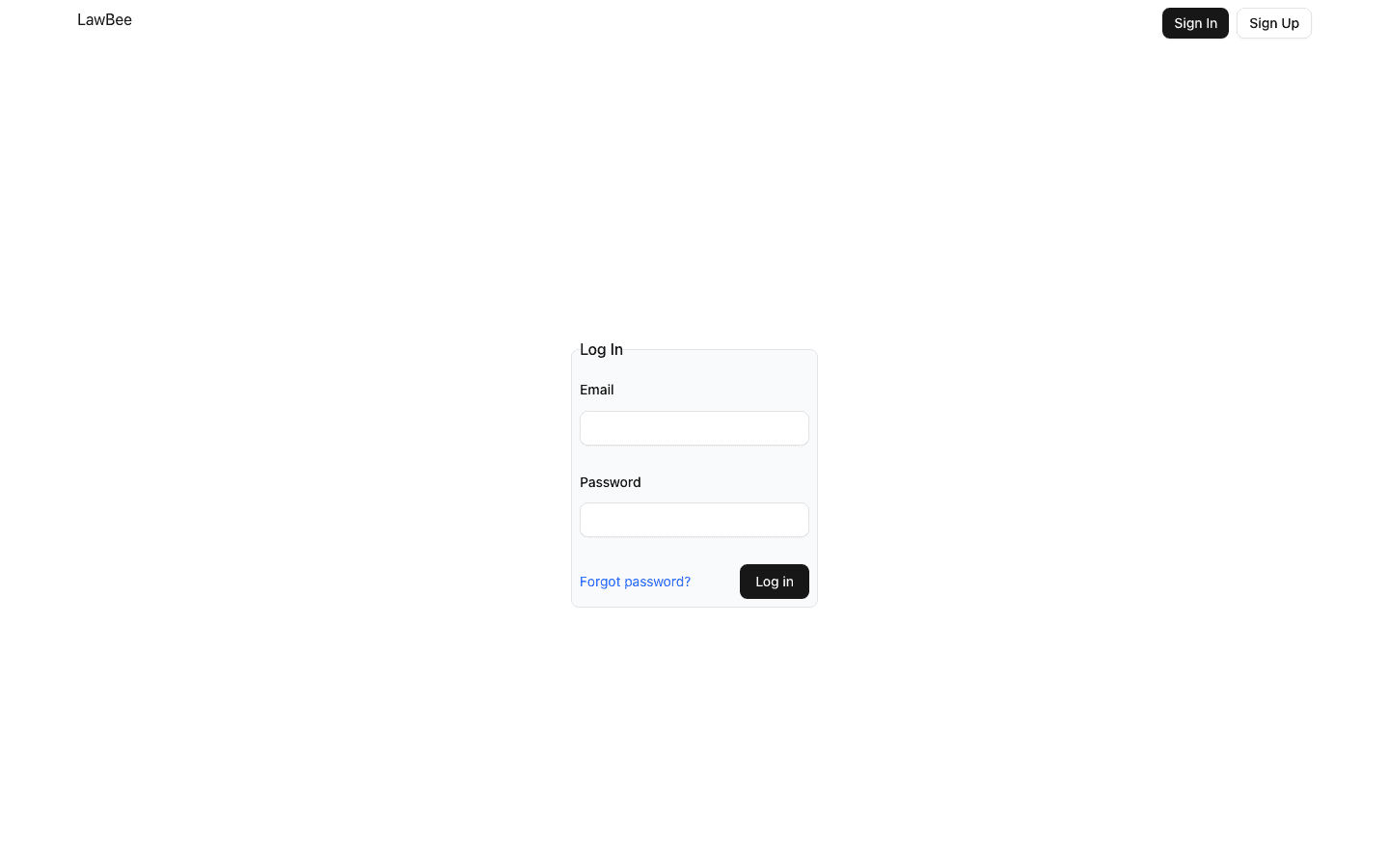
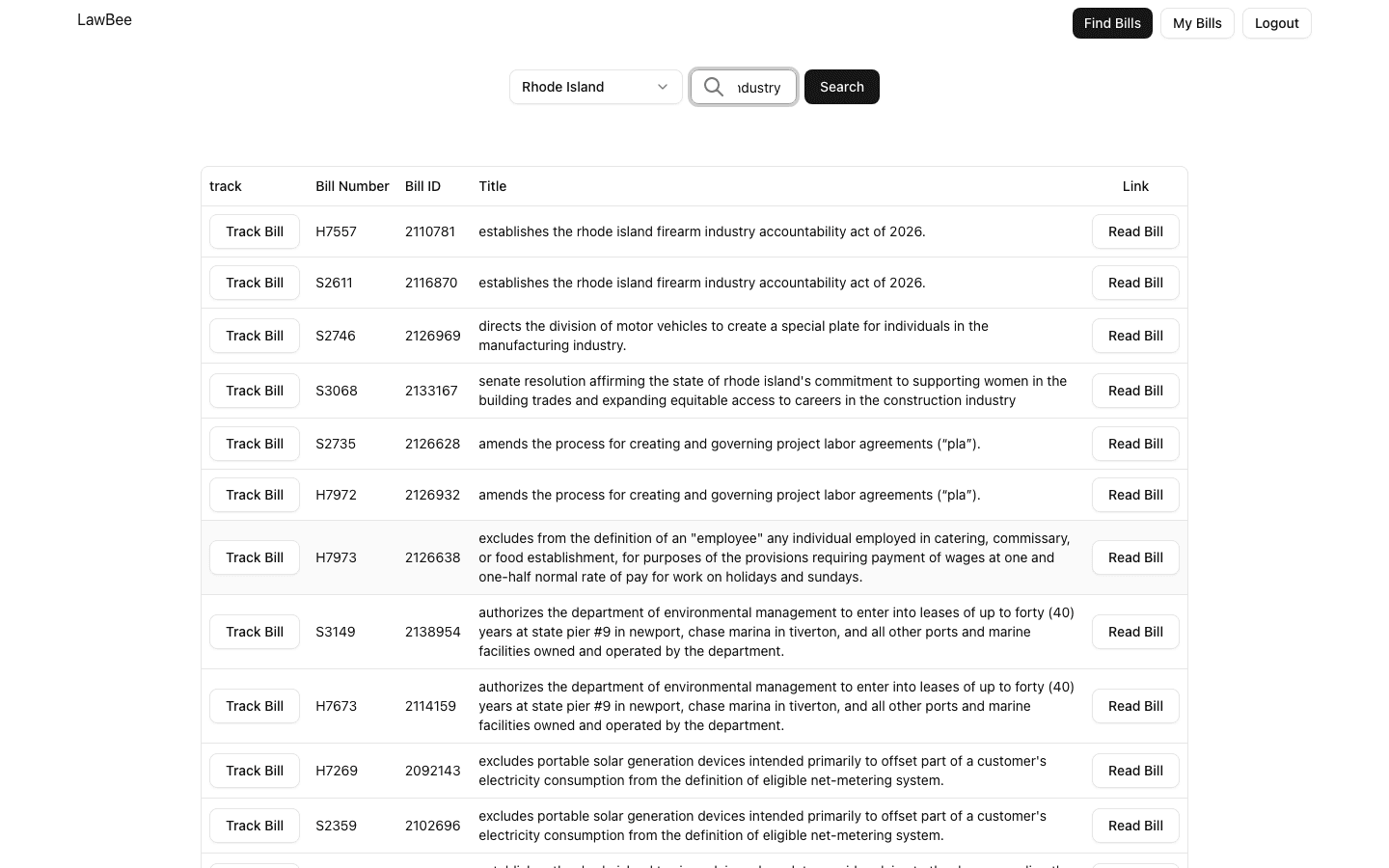
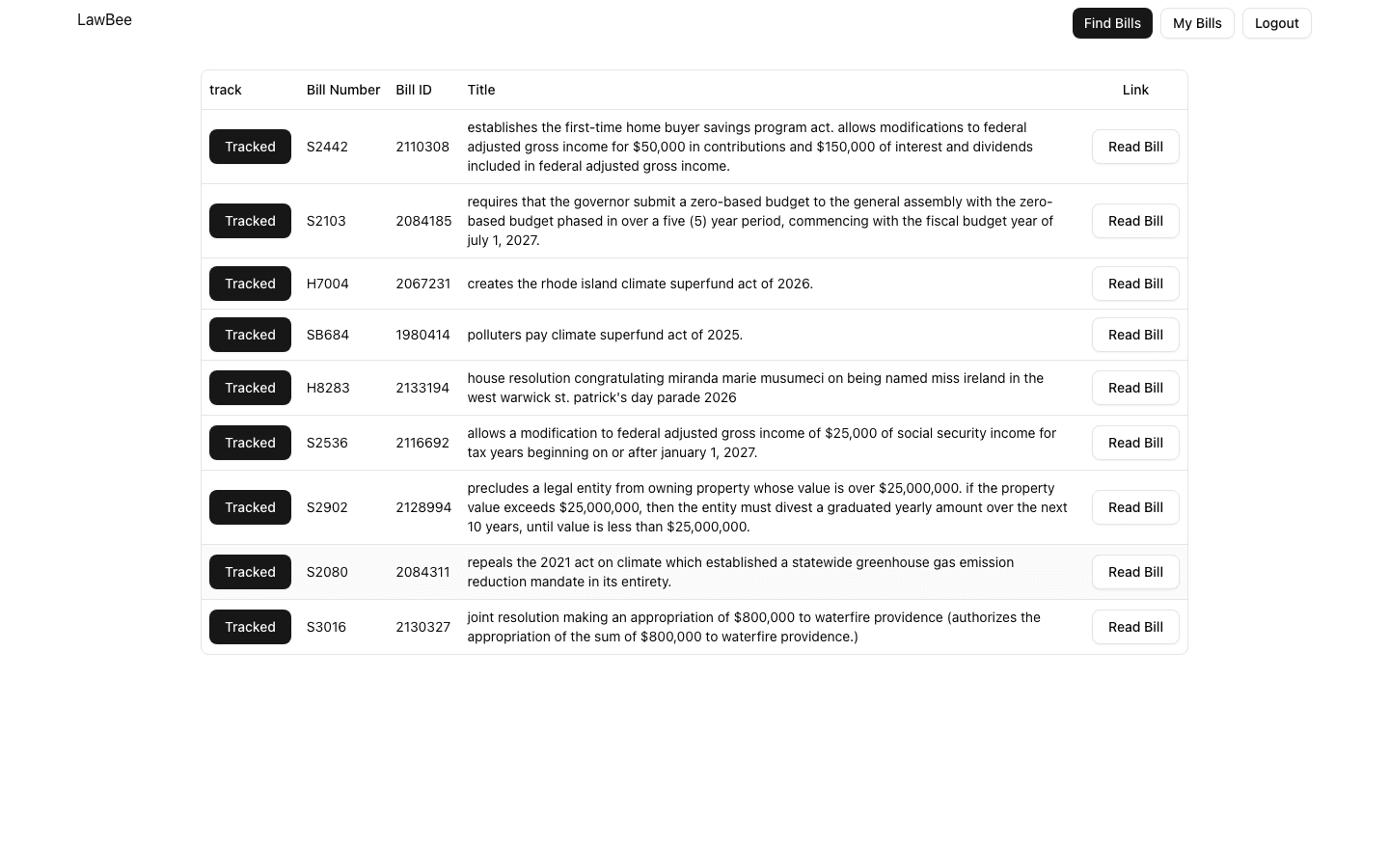
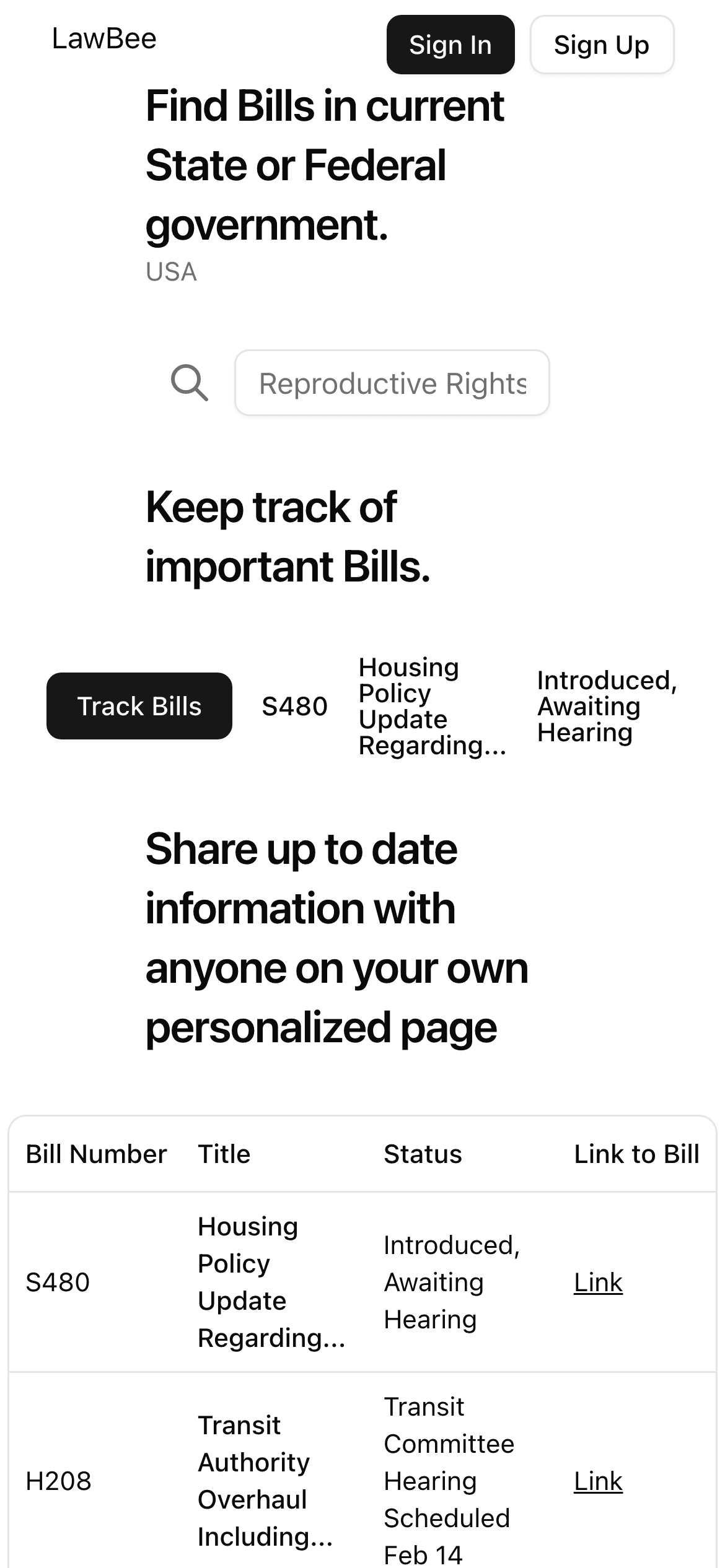
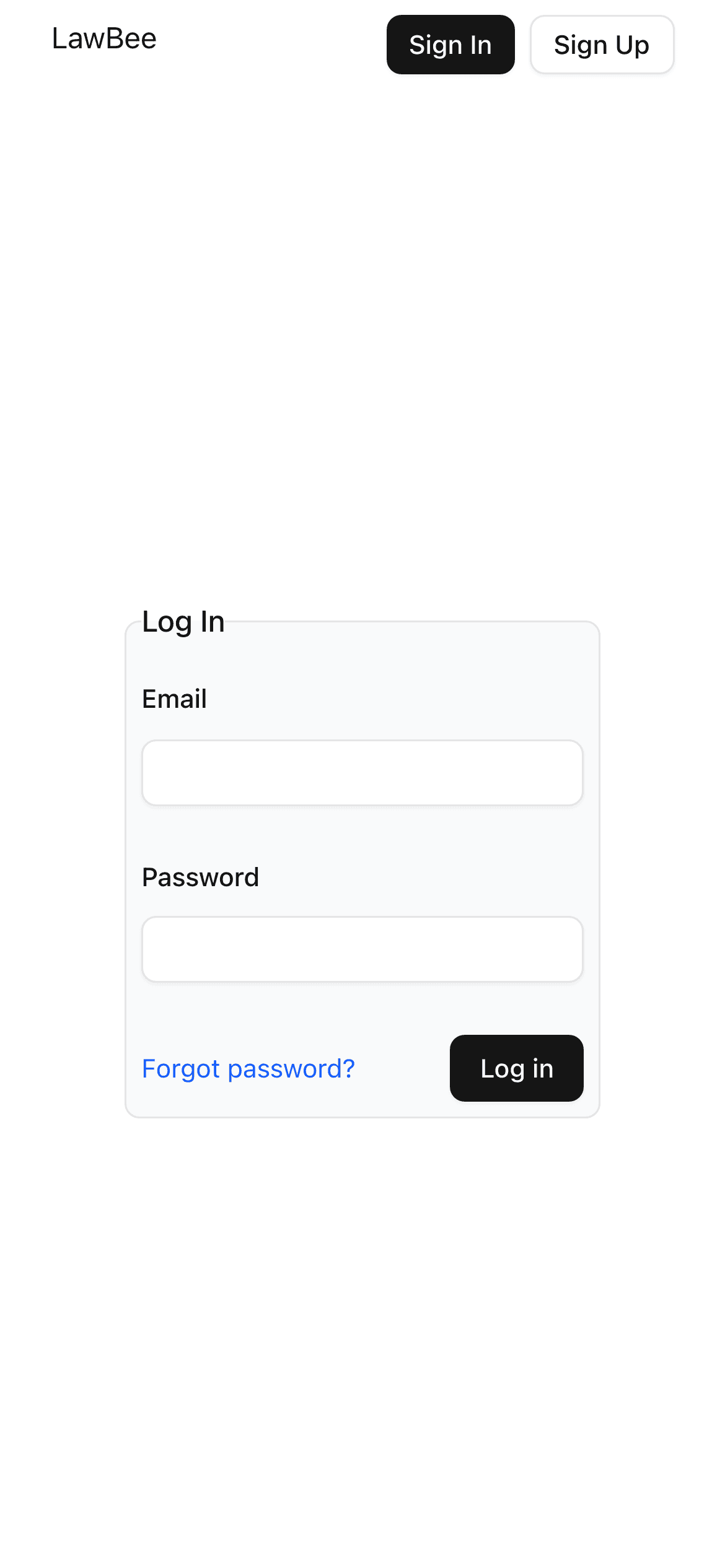
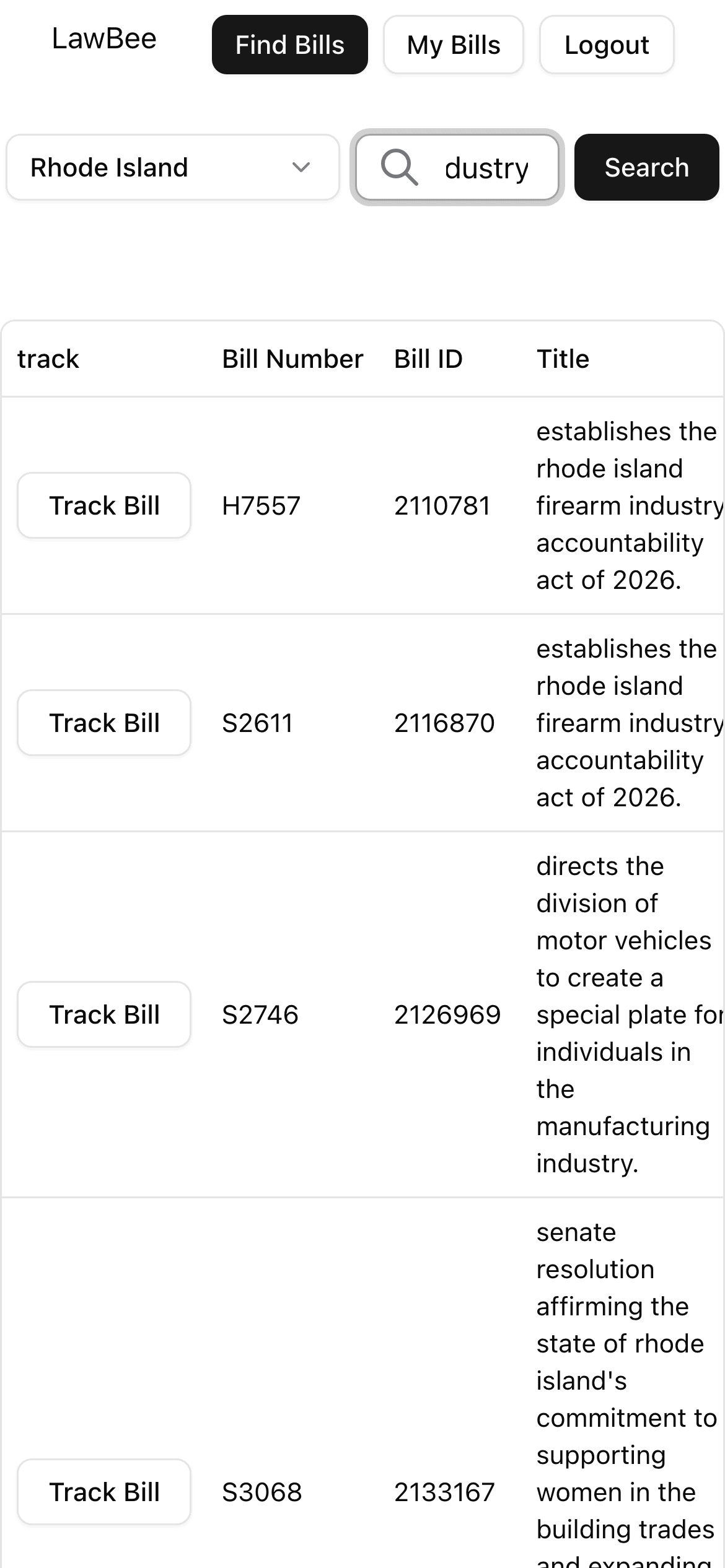
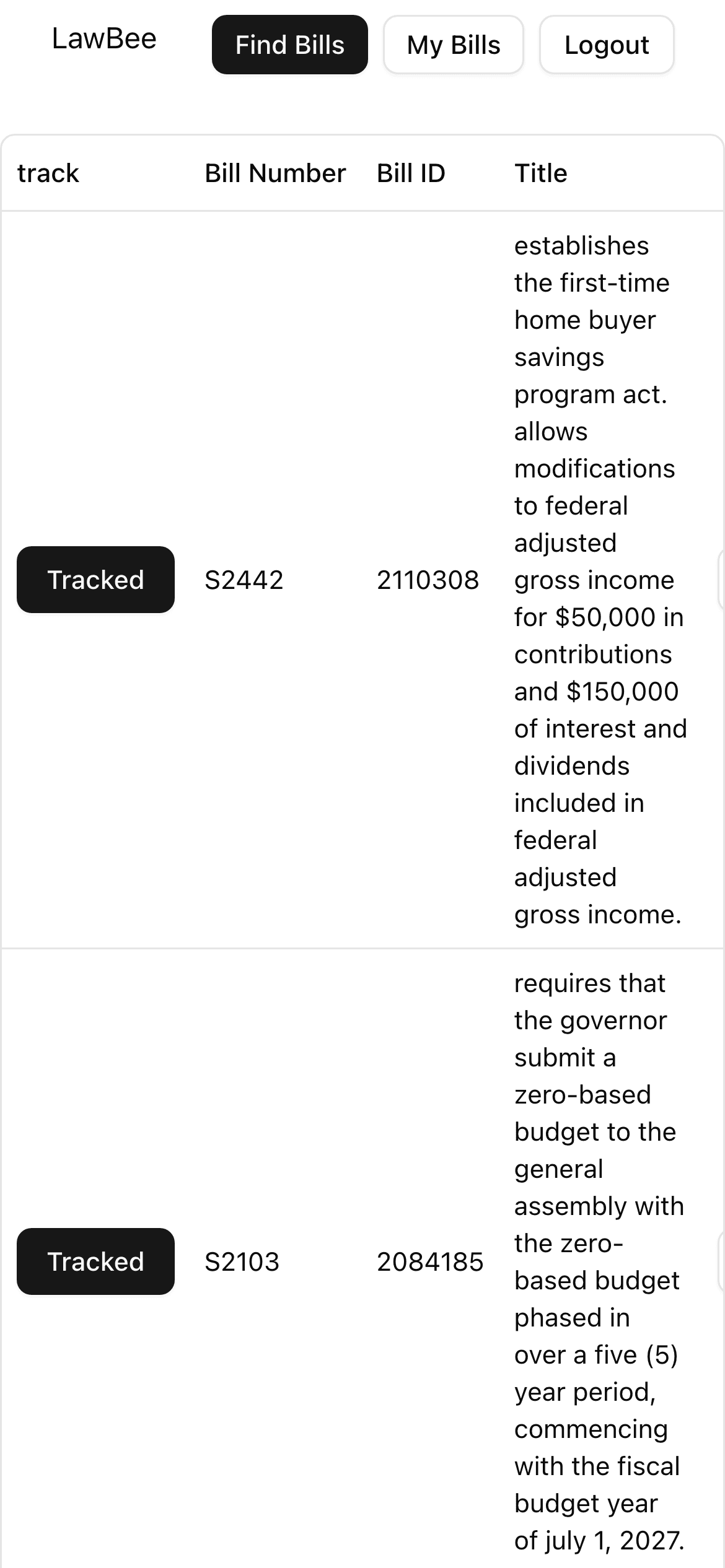
Captured from a live product at www.lawbee.org (no longer in use): marketing home, login, on-page search with the term "industry", and the /mybills view in desktop and mobile widths (anonymous session—shows sign-in if not logged in).
1/8
Role: Product Designer & Developer
Project Type: Client-facing web platform
Primary Goal: Build trust and generate qualified inquiries
Focus Areas: UX, content architecture, performance, SEO
Built with Tailwind CSS and a component kit approach (shadcn/ui-style primitives) to keep spacing/typography/interaction patterns consistent across the product.
Integrated Supabase authentication (OAuth + email/password) and enforced per-user access at the database layer using Supabase’s security model (RLS/policies) rather than trusting the client.
Used middleware/route protection patterns to keep authenticated pages private and ensure sensitive user/session data is never exposed unintentionally.
Integrated the LegiScan API to ingest standardized legislative data used by NGOs across the U.S., with frequent refresh cadence (e.g. hourly updates) to keep bill status current.
Why: Keeps the experience consistent across pages while making future edits quicker.
Tradeoff: Reduced one-off styling freedom in exchange for stronger maintainability.
Why: Guides users from trust signals to service details and finally to contact actions.
Tradeoff: Reduced space for secondary details in exchange for faster scanning and clearer next steps.
Why: Supports organic discovery by aligning headings, copy, and page intent.
Tradeoff: Content structure needed stricter consistency, which required extra editorial discipline.
Current results are strongest in qualitative feedback and clearer user flow. Next, I would layer in direct measurement to quantify conversion and retention impact.